

OLED vs Mini-LED Monitors: Best Displays for Gaming in 2026
December 20, 2025 | by GameSnag Team
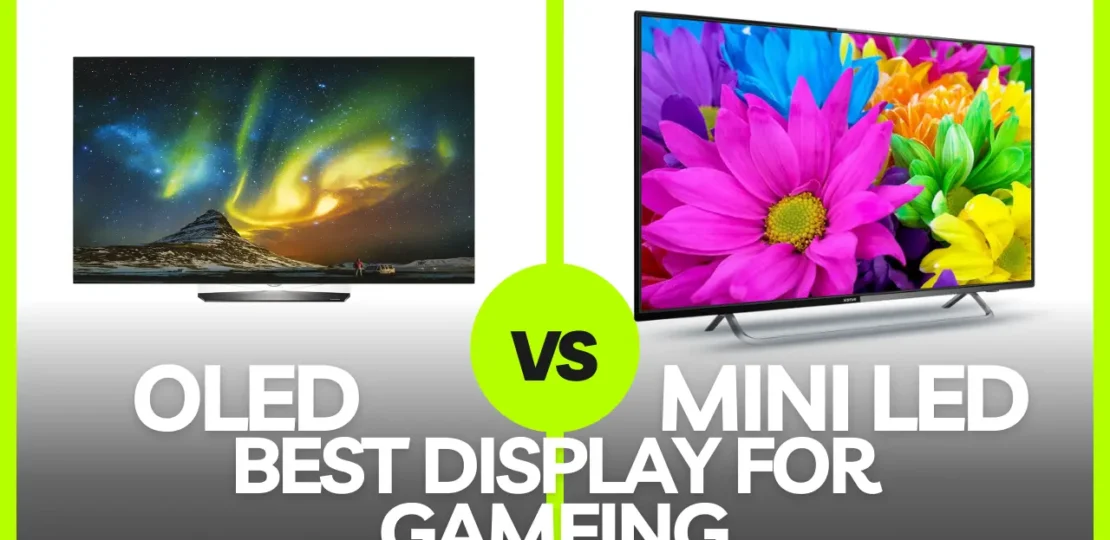
Gaming displays in 2026 are no longer just about resolution or refresh rate. They have become the soul of the gaming experience. With GPUs pushing extreme frame rates and games delivering cinematic visuals, the monitor you choose now directly affects immersion, performance, and even eye comfort.
At the center of the debate are two premium display technologies: OLED and Mini-LED.
Both promise stunning visuals. Both are expensive. Both claim to be the future of gaming.
But when it comes to real-world gaming in 2026, which one actually makes more sense?
This article goes deeper than spec sheets and marketing claims. We’ll explore hidden trade-offs, long-term usability, burn-in reality, HDR behavior, competitive vs cinematic gaming, and why many gamers regret choosing purely based on hype.
Why OLED vs Mini-LED Is the Most Important Display Debate in 2026
In earlier years, gamers mostly compared:
- TN vs IPS
- 60Hz vs 144Hz
- 1080p vs 4K
In 2026, those questions are largely settled.
Now the real question is:
Do you want perfect blacks and instant response, or extreme brightness and long-term reliability?
OLED and Mini-LED represent two completely different philosophies of display design.
Quick Technology Breakdown (Without the Marketing Noise)
What OLED Really Is
OLED (Organic Light-Emitting Diode) panels use self-emissive pixels. Each pixel lights itself and turns completely off when showing black.
What this means in practice:
- True blacks (not dark gray)
- Infinite contrast
- Pixel-level lighting control
- Near-instant response times
No backlight. No zones. No blooming.
What Mini-LED Actually Does
Mini-LED is still an LCD panel—but with thousands of tiny backlight zones instead of a few dozen.
This allows:
- Much higher peak brightness
- Better HDR highlights
- Reduced blooming compared to regular LCD
- Longer lifespan with no burn-in risk
Mini-LED improves LCD—but it does not replace it.
Gaming Visuals: Which Looks Better in Real Games?
OLED in Gaming: Pure Immersion
OLED monitors excel in:
- Dark scenes
- Horror games
- Space environments
- Cinematic RPGs
- Single-player storytelling games
Because black pixels are truly off, scenes feel deeper and more realistic. Shadows reveal detail instead of gray haze. Explosions pop without washing out the scene.
This creates a “window into the game world” effect that Mini-LED still struggles to fully match.
Mini-LED in Gaming: Brightness Power
Mini-LED shines (literally) in:
- Bright environments
- HDR-heavy games
- Open-world daylight scenes
- Competitive gaming rooms with lots of ambient light
HDR highlights like sunlight, fire, reflections, and neon signs can look more intense than OLED—especially in well-lit rooms.
However, blooming around bright objects on dark backgrounds still exists, even in 2026.
Response Time & Competitive Gaming Performance
OLED Is Still the King of Motion Clarity
OLED response times are nearly instant. This results in:
- Zero ghosting
- Extremely clean motion
- No inverse ghosting artifacts
For fast-paced FPS games, OLED delivers the smoothest motion possible.
Mini-LED Is Fast—but Not Perfect
Modern Mini-LED gaming monitors are fast, but:
- Still rely on LCD pixel transitions
- Can show mild ghosting in dark-to-bright transitions
- Require tuning overdrive settings carefully
For most players, this difference is subtle—but esports players will notice it.
The Burn-In Question: Reality vs Fear
This is where many gamers hesitate.
OLED Burn-In in 2026: Reduced, Not Gone
OLED technology has improved massively:
- Pixel shifting
- Logo dimming
- Automatic brightness control
- Better organic materials
However, burn-in is still physically possible.
High-risk usage patterns:
- Static HUDs (MMOs, MOBAs)
- Long daily sessions
- Same game played for years
- Desktop use with static UI
For casual and mixed-use gamers, burn-in is unlikely—but not impossible.
Mini-LED: Peace of Mind
Mini-LED has zero burn-in risk.
This makes it ideal for:
- Gamers who play the same game daily
- Streamers with static overlays
- Gamers who also work on the same monitor
- Long multi-year ownership
This psychological comfort matters more than specs.
HDR Gaming: The Most Misunderstood Comparison
HDR is not just brightness—it’s contrast + tone mapping + control.
OLED HDR: Precision Over Power
OLED HDR offers:
- Perfect dark detail
- Accurate highlights
- Zero blooming
But peak brightness is limited compared to Mini-LED.
Result:
- More cinematic HDR
- Less eye-searing highlights
Mini-LED HDR: Raw Impact
Mini-LED delivers:
- Extremely high peak brightness
- Eye-catching HDR highlights
- Strong daylight performance
But:
- Blooming can break immersion
- Dark scenes can lose subtle detail
HDR on Mini-LED feels spectacular, HDR on OLED feels natural.
Long Gaming Sessions & Eye Comfort
In 2026, many gamers play for hours—not minutes.
OLED and Eye Comfort
OLED panels:
- Have no backlight bleed
- Reduce eye strain in dark rooms
- Feel easier on the eyes at night
But aggressive brightness limiting can sometimes feel distracting.
Mini-LED and Fatigue
Mini-LED monitors:
- Are extremely bright
- Perform better in daylight
- Can cause fatigue in dark rooms if not tuned properly
For mixed lighting conditions, Mini-LED offers more flexibility.
Productivity + Gaming: The Hybrid Use Case
Many gamers now use one monitor for everything.
OLED for Productivity
Pros:
- Incredible contrast
- Sharp text on newer OLED panels
Cons:
- Burn-in risk with static UI
- Taskbars, icons, timelines stay fixed
Mini-LED for Productivity
Pros:
- No burn-in concerns
- Stable brightness
- Excellent for long workdays
Cons:
- Less perfect blacks
- Minor blooming in dark UI themes
If you work as much as you game, Mini-LED is often the safer long-term choice.
Price Trends in 2026
OLED prices have dropped—but remain premium.
- OLED gaming monitors still cost more per inch
- Mini-LED offers better value at larger sizes
- Entry-level Mini-LED undercuts OLED significantly
For many gamers, Mini-LED offers 90% of the experience at a lower risk and cost.
The Hidden Truth: Why Hybrid Panels Are Coming
Here’s a future insight most blogs miss:
Manufacturers are already blending OLED principles with Mini-LED safety:
- OLED with stronger pixel protection
- Mini-LED with smarter zone algorithms
- Micro-LED on the horizon (still expensive)
This means today’s decision should be based on how you actually play, not what’s theoretically better.
So… Which Is the Best Gaming Display in 2026?
Choose OLED if:
- You play mostly story-driven or cinematic games
- You game in dark rooms
- You upgrade displays frequently
- You value immersion over longevity
Choose Mini-LED if:
- You play competitive games daily
- You keep monitors for many years
- You work and game on the same screen
- You want extreme brightness and peace of mind
Final Verdict
OLED delivers the best-looking gaming experience money can buy in 2026.
Mini-LED delivers the most practical and future-proof gaming monitor.
There is no universal winner—only the right choice for your gaming habits.
RELATED POSTS
View all

AI NPCs vs Scripted NPCs: How Game Worlds Are Becoming Truly Alive in 2026
December 22, 2025 | by GameSnag Team

FPS vs RPG in 2026: Which Genre Is Growing Faster?
December 20, 2025 | by GameSnag Team
Gaming Without a GPU: How Well Do Integrated Graphics Perform in 2026?
January 14, 2026 | by GameSnag Team